A clearer view of your brand across AI search
5 minute read
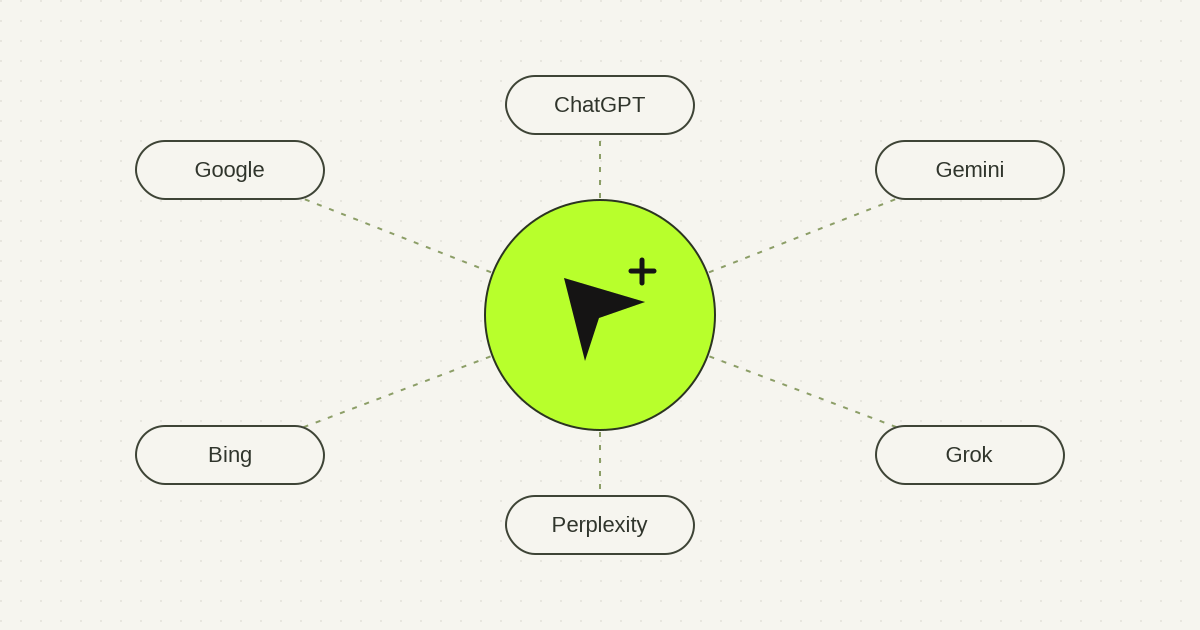
AI search adds another place for customers to discover a brand. A useful starting point is a set of questions your customers actually ask, together with a repeatable way to review the answers.
This sample guide walks through that workflow. The diagrams are illustrative, and the example prompts are for planning your own tracking project.
Start with the questions that matter
Build your first prompt set around a product category, a customer problem, and a decision. Keep the wording close to the way a buyer would ask for help. A short, focused list is easier to review than hundreds of unrelated prompts.
For example, a team selling project management software might begin with questions about planning a launch, coordinating a remote team, or comparing tools for a small agency.
Group prompts by intent
Separate discovery questions from comparisons and purchase decisions. This makes it easier to understand why a brand is mentioned in one answer but absent from another.
| Intent | Example question | What to review |
|---|---|---|
| Discovery | How do small teams plan a product launch? | Topics and useful sources |
| Comparison | Which tools suit a remote agency? | Recommendations and alternatives |
| Decision | What should we check before choosing a tool? | Product details and citations |
Read mentions and citations together
A mention tells you that a brand appeared. A citation gives you a source to inspect. Review both, because a brand can appear without its own website being linked, and a page can be cited without a recommendation.
Record the engine, the prompt, the date, the wording of the answer, and the linked pages. Keep the original answer available so your team can return to the same context later.
Treat an individual answer as one observation. Look for patterns across a consistent prompt set and repeated checks.
Turn a gap into a useful update
Choose one page that could answer the question more clearly. Check whether its main explanation is easy to find, specific to the problem, and supported by accurate product information.
A useful content brief can stay simple:
- Name the question and the reader.
- Identify the page to improve.
- Describe the information the reader still needs.
- Assign an owner and a review date.
Keep the handoff small
Attach the relevant answer, source URL, and proposed edit to the task. This keeps the writer close to the original question without turning the brief into another large report.
Review changes over time
Use the same questions and record the date of each check. Changes in generated answers can have several causes, so avoid attributing every movement to your latest edit.
In aeolyzer, bring prompt tracking, competitor comparisons, and content work into the same workspace. Start with a manageable set of questions, inspect the answers, and choose the next useful action.
Your next step
Create a project for one website. Add a small group of buyer questions, review their intent, and use the first answers to decide what deserves a closer look. Explore the interactive demo to see how that work fits together.